
IMPACT
Saluting Our ‘Sanskar Citizens’ – The True Guardians of our Environment!
We dedicate this space to our young environmental crusaders from our ‘Sanskar’ program who continue to live our curriculum as a way of life. We salute them for touching lives and transforming their environment wherever they go. They continue to inspire us as champions for a sustainable future we are stepping into.
1. Kalpana Sain
 “Sanskar has made me what I am today,’’ says Kalpana Sain who considers herself very fortunate to have done the programme ten years back when she was in std 6. “Just like Lord Buddha got a new life and discovered himself when he got enlightenment, I feel I got a new life and discovered myself after I did the Sanskar programme. I had no clue about the environment problems and how we cause them and damage our health and society also. It opened my eyes to these problems and made me think how I am going to make a difference. Sanskar made me believe in myself and I felt I became much more responsible in every area of my life because once you become responsible towards one area like environment, you automatically become responsible in other areas. Also, it was so much fun because we were taught through games, workshops, campaigns, quizzes and so many enjoyable activities that we couldn’t wait for the next Sanskar class. Though I changed schools and cities, I continued to spread the Sanskar programme everywhere I went. Today, I am a doctor and I still keep following the teachings I learned from Sanskar and spread them to everyone in my life.”
Kalpana’s inspirational work
She educated a group of playmates in her colony on current environment problems and solutions that she learned through the Sanskar programme. She was able to motivate them to form a team of volunteers to help her spread her message
- She organised talks and demonstrations on effective waste management and conducted clean up drives in her surrounding
- She also organised plays on the 3R concept of Reduce, Reuse and Recycle waste for her housing society
- She conducted workshops on vermicomposting and preparation of Natural Holi colours
- She convinced her family members and hundreds of other people in her school and neighbourhood to give up fire-crackers at Diwali time, both in Mumbai and Chennai
- She carried out campaigns against plastic bags in her locality and convinced many people to substitute plastic bags with cloth ones
- She asked all her friends to plant one tree sapling each on her birthday instead of giving her any other gift.
- She and her team held talks and meetings on the need for conservation of water on a daily basis and specially at the time of festivals like Holi.
2. Neha Gujjar
 “When I was in 6th grade, I got an opportunity to be a part of Sanskar India Foundation’s programme called Sanskar. My classmates and I eagerly looked forward to Wednesdays, when the Sanskar teacher used to tell us about various environment and civic issues. Every time we left the class reflecting upon our actions and how they are going to affect our future.
Although the programme motivated to make many lifestyle changes and use natural resources judiciously, the one topic that moved me deeply was that of fire crackers. Many days before Diwali we were told about the innumerable harmful effects of bursting firecrackers and students shared their experiences. We were so impacted that at the end of the class we pledged never to burst firecrackers. It’s been over 12 years since then and I haven’t burnt a single firecracker. At the end of each class we were asked to share what we learnt with our family, friends and neighbours. After this class we went out to convince people to give up firecrackers. My family has lived up to the pledge with me.
I believe that being sensitized to issues in society at a young age moulded my thoughts and aspirations. Now I am a teacher and impart the teachings of Sanskar to my students so that they learn young.”
3. Rukamani Dikshit
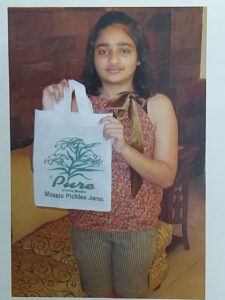 Rukmani Dikshit deserves to be lauded for her efforts in convincing her grandmother to change to using eco-friendly bags for her pickle business instead of plastic ones.
Rukmani was so inspired by the Sanskar sessions organised by Sanskar India Foundation in her school that she decided to lead the change in her family. What is heartening is that she saw a connection between what was being taught in class to real life. Realising that her family business too was consuming plastics, a commodity whose usage needs to be drastically reduced, she decided to ACT with responsibility and put a stop to this.
Rukmani’s maternal grandmother runs a pickle business, Pure, selling mainly through exhibitions. ‘Rukmani would ask us to stop using plastic bags to give away the pickle bottles before each exhibition. At one point she even threatened to not allow us to hold any exhibitions if we did not give up plastics!’ said Mrs Nandita Dixit, Rukmani’s mother.
Thanks to Rukmani’s efforts the business converted to using eco-friendly bags in place of plastic, which did cost more but have been seen as a small price to pay for a greener planet.
4. Samiruna Khan and Vithal Chavan

Vithal Chavan
Totally inspired by the Sanskar sessions on plastic and its dangers, this twelve-year-old student from Deonar Municipal School, resolved to make banning plastic the mission of her life. After ensuring that her family and neighbours stop using plastic bags for shopping, she then went the extra mile to convince a neighbouring tea stall owner, Vithal Chavan, to give up selling tea in plastic cups. Empowered with the knowledge about plastic, that she acquired during her Sanskar classes, she was easily able to motivate him to take action.
“I used to sell around 250 cups of tea in disposable plastic cups daily. When this little girl taught me all about the dangers of plastic for the environment and serious effects on our health, I was so shocked that I immediately decided to give it up. I have pledged never to use plastic disposable cups again. It’s been almost a year since I have used any plastic cups in my shop, that means at least 80,000 less plastic cup waste this year and every year from now on. I am grateful to Sanskar India Foundation and Samiruna for opening my eyes to the dangers of plastic.” says Vithal Chavan.
It is really heartening to see that the nation is now championing SIF’s cause against disposable plastics, one of the main topics we cover as a part of our school program ‘Sanskar’.
We salute Samiruna and Vithal for their everlasting contribution to the environment. A very special thanks to our Sanskar teacher, HarshadaChopdekar for motivating the action through her passionate teaching.
5. Sukhjeet
6. Anika Garg
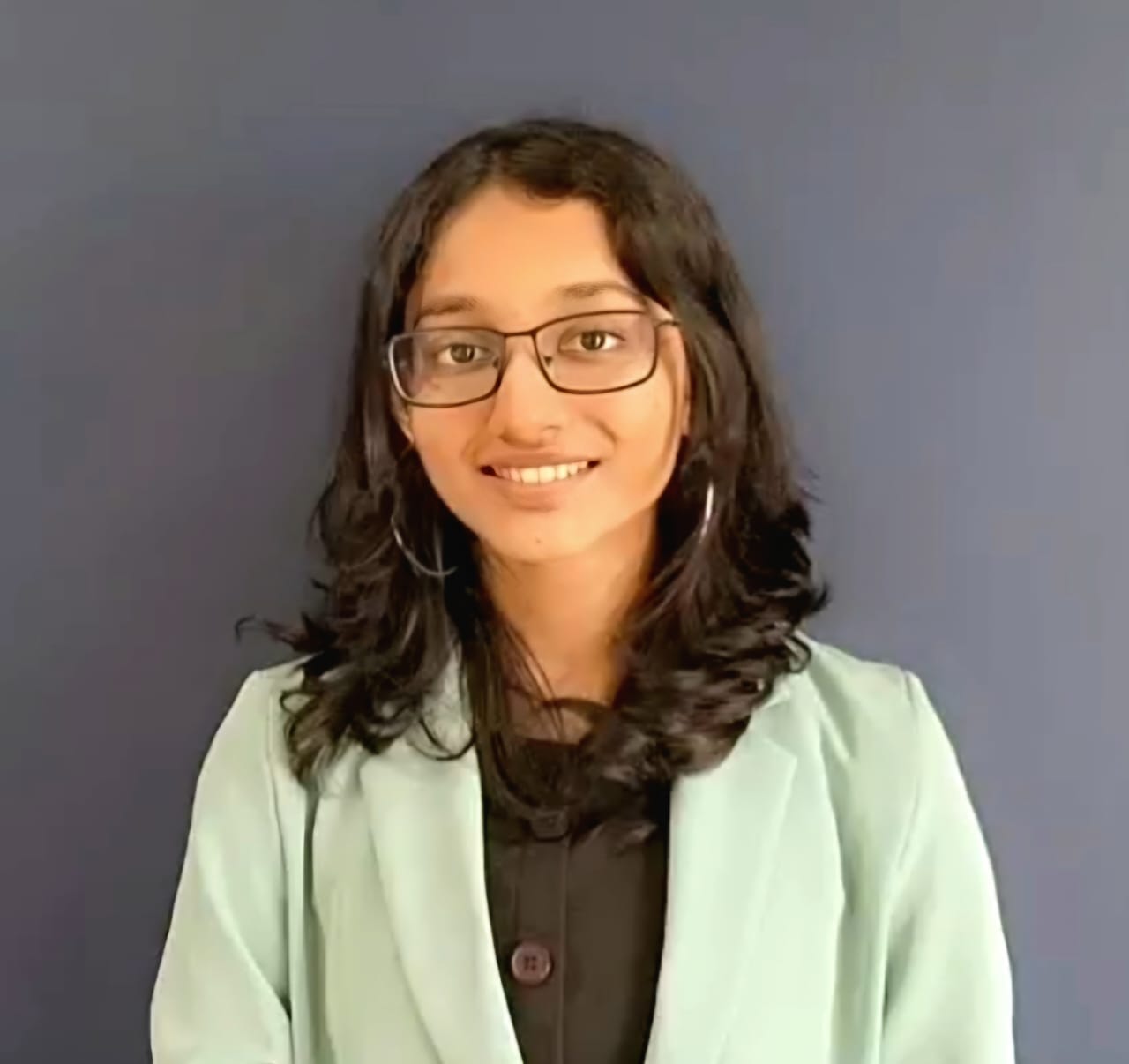
“Volunteering with Sanskar India Foundation has been a life changing opportunity for me” says Anika Garg. “When I met with the members of SIF and shared a desire to make a change, they suggested I work for the cause of e-waste. Learning from them about the dangers of wrong disposal and how we can make a change, I was inspired to join SIF as a student volunteer. Joining SIF’s campaign “Wired for Change”, I was asked to lead an awareness and collection drive in my building. I was guided on all the steps required for the same and to my joy it resulted in resounding success.
Encouraged by this, I expanded the initiative to neighbouring buildings with the help of other volunteers and the Rotary Club.
I’m proud that the collection system is now a permanent feature in our society, recycling hundreds of kg’s of e-waste, thanks to SIF’s guidance”
7. Shobha Bamboli
 The greatest threat to the planet is the belief that someone else will save it – Robert Swan
Alarmed to learn from SIF about the dangers of incorrect disposal of E-waste, Shobha was moved to volunteer for the cause.
In Shobha’s words –“ As a Sanskar Eco Warrior, I was thrilled to be on the field, making a difference in tackling environmental pollution. With the aim to create awareness on E-waste hazards and correct disposal, I decided to conduct an E-waste collection drive in my own housing society. Albeit getting the necessary approvals was challenging, collecting more than 100 Kgs of E-Waste in two days made my efforts worthwhile.”
Shobha now devotes her time volunteering for SIF activities and conducting workshop on E-Waste to create awareness about the hazards of wrong disposal of E-Waste and inculcate safe disposal methods. She has pledged to keep striving for a greener and better future.
Since inception, Sanskar India Foundation (SIF) has been working relentlessly with schools, colleges and housing societies in Mumbai city with its flagship programme called ‘SANSKAR’. We continue to ideate, innovate and create a fun way of learning a holistic way of living which protects and conserves the environment, promotes civic sense and social justice in society. Our programme, currently conducted in different forms in schools, colleges, special institutions and housing societies has resulted in adoption of eco-friendly way of living by many
We proudly share with you some of these values which are transforming lives and society at large such as: E- Waste Awareness, Collection and recycling; saying no to plastics; celebrating eco-friendly festivals; saving energy; saving water; waste recycling; saving trees; water harvesting; starting green clubs etc, to name just a few. The values we have instilled in our students have enabled them to make choices which are good for one and all and lead holistic way of living.
Over the years, thousands of our students have shown us and society that it is never too late nor impossible to transforming lives and society. Just a few efforts are compiled below as examples.
1. E-Waste Awareness and Recycling :
It is said that awareness is the greatest agent for change. Our workshops on E-waste were instrumental in bringing about the much needed change.
Hufrish, Damani, Jaini Gala, Kinjal Oza and Shresha Koli, students of SY B.Ed., BTTC created awareness on the harmful effects of improper disposal of E- waste. They created educative posters on the proper ways of E-Waste disposal.
Alarmed to learn about the serious, toxic effects of E-Waste, Rebecca, Pooja, Aazam, Abhishek, students of SY B.Ed., BTTC, spent their summer vacation trying to spread this awareness to their housing societies and surrounding areas. Through a door-to-door awareness campaign, combined with a collection drive, they managed to send around 35 kgs of E-Waste for safe disposal through a licenced recycler.
Anika and Sukhjeet have become ambassadors of E- Waste awareness, collection and safe disposal.
2. Avoiding Plastic Usage :
3. Eco-friendly festivals:
As a country with rich cultural traditions, we are a country of festivals with celebrations all year round. These are social occasions where people use a lot of resources and likewise, generate a lot of waste and pollution, including toxic wastes. We took it upon ourselves to inculcate a value of responsibility to our children as to how our actions impact the environment and society at large during such occasions and how they can make a difference. Towards this end SIF conducts workshops on celebrating eco-friendly festivals all through the academic session in schools.
We see the transformation their simple choices are making to society.
Cracker free Diwali:
These students of Army Public School celebrated eco-friendly Diwali by saying ‘no to crackers’ with messages for everybody to reduce air and sound pollution; avoid health and fire hazards and stop child labour.
Ratish Kumar, Ajuni Kaur Ghuman, Baljeet, Aditi Arya, Archanna Kumari and DivyaPilani said ‘No to Crackers’ out of concern for animals, environment and child labour. They also stopped friends and family from bursting crackers by spreading awareness on the negative impacts of crackers on the environment and society.
Aishwarya Deshpande spread awareness on the harmful effects of crackers through charts in her locality and celebrated a cracker free Diwali in her colony.
Ankit used the money for crackers to buy gifts for poor children.
A majority of our Sanskar class VI students at Kendriya Vidyalaya celebrated Diwali by saying ‘NO to Crackers’ to reduce noise and air pollution, to avoid fire accidents, health hazards and child labour. Others are also on the way to a ‘Cracker-free Diwali’ as they are reducing their use.
Kashish and Ariana, J.B Petit High School for Girls, have been spreading awareness on the hazardous effects of firecrackers through leaflets they prepared with information on ill-effects of crackers and have visited atleast 30 houses to spread the message.
Kishor Patel, Bai Kabi Bai English School has cut down on crackers and see himself burning zero crackers in future.
Green Ganesha:
Avishka, J B Petit High school, celebrates ‘Eco-friendly Ganesha’ by installing her handmade ‘shadukimitti’ Ganpati idol at home for the festivities, which she learned to make at SIF class. The idol is then immersed in a bucket of water and once the silt is dissolved, the water is used for watering plants.
Green Holi:
Dhruv Agarwal, Army Public School educated people in his society on the hazards of chemical colors during Holi and celebrated an eco-friendly Holi by distributing natural colours.
Hajra Khan, Municipal School No.1, has been spreading awareness on harms of chemical colors and encouraging friends to use natural colours to avoid skin problems.
4. Saving Energy & Water
Energy is precious! We are dependent on energy to live a comfortable life. However, we waste a lot of energy through our carelessness. Saving energy is both saving money and resources.
Water is life! It is a basic requirement of life. Hydrological cycle is changing and water security is a big concern for us. Taking care of natural water resources during festivals to save them from pollution or using it at home, school or wherever, water is an important theme for us.
Our students now make a conscious habit of saving energy and conserving water with their simple acts
Sanya Tanswala, J B Petit School saves energy everyday by switching off the geyser and lights after use.
Krish Mendosa, Campion School, walks to school or for groceries instead of using the car and recommends the bicycle to his friends. He also uses the wet waste from his kitchen in his garden to make fertilizer.
Mallika Singh, J B Petit High School, now protects the environment by doing little things which save energy such as turning off taps and lights when not required; using cloth bags; making bags out of old newspaper; making natural colours; using left over water to water plants; reusing plastic bags and putting a bucket under the leak in her bathroom to save water.
Diya Gandhi, J B Petit High School makes use of unused water from her bottle to water plants or wash utensils; reduces the use of plastic in her building by sending letters which educate people on the harms of plastics and reduces pollution by spreading awareness, on harmful effects of crackers through posters.
Kadija Bandukwala, J B Petit High school switches off power after her parents charge their phones, uses unused water from her bottle for plants, switches off fan before leaving the lift and does not use plastic bags for shopping.
Rahul Ingle, Holy Name High School has stopped his mother from discarding flowers in water after performing rituals to stop water pollution. She now advices others to do the same.
Sara S Shah, J B Petit, uses unused water from her water bottle to water plants in her compound and re-uses wrapping paper and envelopes.
Elahi Jalali, J B Petit, is raising awareness on saving water by drawing attention to leaking taps.
Mahek M, J B Petit, closes taps when not used, avoids shower baths and uses cloth bag to avoid plastic danger.
Anchal Ranka, J B Petit, is spreading the message of saving water through posters in her building and sensitizing friends about the shortage of water in the world.
Twisha Metha, J B Petit, reuses water from her bottle to water plants, switches off lights when not required and spreads awareness to stop using toxic colours for Holi.
Niyoshi Maniyar, J B Petit, stopped wastage of water in his bathroom by fixing a leaking tap.
Siya Singhania, J B Petit, keeps the tap closed while brushing, reuses wrapping paper, reuses bottle water on plants, uses cloth bag for shopping, switches off lights when not required and rarely burst crackers.
Shetuji Sengupta, J B Petit High School, researches on water pollution and spreads awareness through posters to stop wasting water, uses newspaper as gift wraps and makes paper bags.
Aaliyah Daruwala, J B Petit High School, saves water while brushing by keeping the tap closed,uses cloth bags, switches off lights and fans when not required and does not burst crackers.
Sneha Kishor Jadhav, Lord Harris Marathi School, spreads awareness on importance of water in her building and tells people to reduce wastage by using it carefully.
Suran Singh, Municipal Hindi School,educated his friend on the importance of water and stopped him from wasting water by keeping taps closed when not required.
Parveen Khan, Municipal Hindi School, spreads the message to stop wastage of water while doing household chores, even at the cost of getting scolded by people.
Suyash Rane, Municipal Marathi School, is spreading awareness on importance of water and its growing scarcity in villages. This year he asked his neighbours to celebrate Holi without water.
Reshma Nagarji, Deonar Colony School No.3, tells her family members to close taps when not required during washing clothes and utensils.
Mehek Shaikh, Marathi School No.3, Deonar Colony, is spreading awareness on importance of water for all life, including crops that are grown for consumption. She reminds her family and neighbours not to waste water while washing clothes, utensils, cleaning floors etc.
Nijba Padhan, Subhash Nagar Municipal Hindi School, saves water, using it very carefully even though water supply to her house is regular. She realizes that many others in her class are not as fortunate as her. She now keeps bucket below leaking taps until they are fixed to avoid water wastage as and makes sure that water is put to use.
Komal Keti, Marathi School No.2, is spreading awareness to save water for a better future.Checking and closing water taps when left open, she stops other students from wasting water.
Shanti Rajbhar, Municipal Hindi School, played Holi only with natural colours that he learned to make from SIF teachers .He also stopped his friends from throwing water and wasting it, sensitizing them to the problem of many who don’t get water to drink.
5. Saving Trees:
Trees are not only important for their scenic beauty but for a host of ecosystem functions they perform.
They not only give us the life sustaining oxygen and absorb carbon-dioxide but also affect the climate and water resources of a place. Many trees have medicinal values or are culturally significant. So, saving trees is securing our right to clean air and a host of services we depend on trees for.
Here’ s how our green crusaders have taken initiatives to save trees.
Aditya Upadhyay, Bai Kabibai English School no longer plays with paper balls or wastes paper in order to save trees.
Sneha Verma, Army Public School planted seven trees but to change the dry scenery, which upsets her, and takes care of them too.
Tishya Jain, J B Petit, uses unused side of used office papers from her father’s office to save paper.
6. Waste Recycling:
We believe in conservation and judicious use of resources and inculcate a value of recycling waste and reusing it to reduce our resource consumption. This is the need of the hour as we see garbage and wastage all around us.
Our students are leading the way to show us innovative ways of recycling wastes.
Akshay Rao, Campion School, picks up chocolate wrappers, scattered/wasted papers in and around the class and gives them for recycling on the way to his home.
Jaymal Lodha, Campion School has taken to composting wet waste at home.He stops people from littering and requests them to use dustbins.
Hitaxi Mukhi, J B Petit,who outgrew her favourite dress, turned it into a bag to avoid wastage and use of plastic bags.
7. Cleanliness:
Cleanliness, good health and environmental protection goes together. This is what we inculcate in our students to be responsible for their own as well as the well-being of others by taking care of their surroundings and the environment.
Atheena, Army Public School, called up concerned officials, with the help of her father, to clean up a public dustbin which was unattended for two days. She also stopped people from littering around it.
Rishi Bakhai, Campion School educates people to stop spitting in public places as it transmits air borne diseases.
Vivana Shah, J B Petit, stops people from littering in public places, uses glass lamp at night, plays with eco-friendly colors and helped clean Chowpatty beach with her friend by collecting broken idols and plastic bags after Ganesh Chaturthi.
Firoza Salmanee, Municipal Hindi School, has been spreading awareness on environmental protection as air, water and noise pollution cause health problems.
8. Water Harvesting:
Water is life! We are a country blessed with good monsoon but unfortunately facing water crisis.
Though water crisis is a complicated issue inextricably linked with development, we use it every day for various purposes and this gives us an opportunity to develop a healthy relationship with water use in our day to day lives. We can also harvest it during the monsoon and use it for non-consumptive purposes like how some of our students are doing.
Yethiraj Gosavi, Holy Name High School follows a simple logic called ‘catch the drop’ to harvest rain water on the terrace of his society by keeping buckets which he uses for non-consumption activities like washing, flushing etc.
9. Green Clubs:
A group can do more than an individual and when galvanized and driven by a zest for environmental sustainability with social responsibility, they can take society far and give a new future. This is exactly what our students are doing and we are truly proud of them for taking the initiative as a group to maintain cleanliness and greenery in their locality.
Richi Jain, Fort Convent School initiated a club with her friends to create awareness on waste and its management. They regularly collect recyclable waste items from flats in her society and give it to the raddiwala as and when time permits.
Akshaya, from Fort Convent created an innovative initiative,with her friends,called ‘Garbage In and Garbage Out’ tent in her society to recycle plastic bottles.
Each year SIF has been expanding the Sanskar programme to include more schools and benefit more children. In order to make it more sustainable and spread it to other classes in the school we request the school authorities to ensure that at least one teacher from the school is also present while we conduct the programme for the selected class. This way the teacher also gets trained and spreads the education to other classes as well.
In order to expand our horizons even further, we partnered with the Bombay Teachers Training College (BTTC) to conduct training for a class of their under-training teachers. As a pilot, in 2014, we trained a whole batch of D.T.Ed students to conduct our environment programme, ‘Sanskar.’ A class of 23 students underwent intensive training and successfully conducted the programme, under the supervision of Sanskar teachers, in 3 schools and 8 classes. This served the dual purpose of sensitising the undertraining teachers as well as the children who they taught. The long-term benefit of these young teachers spreading the knowledge year after year is immeasurable.
SIF has continued this partnership with BTTC to train more teachers in every year and strives to spread this training to more and more student teachers in order to upscale and spread our wings further.
In the last few years, we have partnered with several organisations, colleges, corporates and associations to spread our work and benefit more and more people from the society. Some of our past associates are Sydenham College of Management, College of Social Work SNDT University, Lala Lajpat Rai College, KPMG, AngelXpress Foundation, SHARE, SPARSH etc